
It is noticeable how many topics that I am covering here in Nepal are exactly the same as the ones I wrote about last year in Ethiopia. Noticeable but not really surprising, since they are similar in so many ways, both being countries which have wealth and poverty sitting alongside one another, both having a large, young population which is desperate to leave, to seek a better life in the developed world.
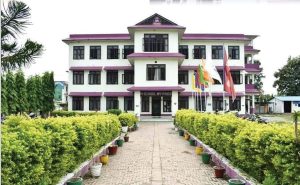
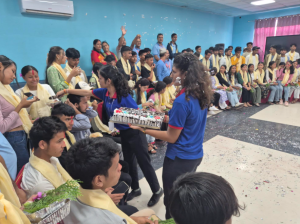
My initial opinion, however, is that Nepal is making a rather better fist of it than Ethiopia. The key in Nepal is education; one cannot walk down the street without seeing signs advertising courses, opportunities to study abroad (though how realistic this is I cannot say.) SPA is a part of this aspirational culture, and at the top end. I was in Yogi’s office the other day when a student came in to have some application form countersigned – a regular problem when talking with Yogi is the number of interruptions for such things – and Yogi asked him where he was applying. “Harvard.”
Ethiopia does not seem to have the same aspirational culture, and there, a major route of exit is to become a domestic servant in Saudi Arabia and the Gulf states – even on just the one day I spent in the airport when leaving, there were scores of young women, one small rucksack each, dressed in branded tabards, T-shirts, whatever, with the name of recruitment agencies printed on them, waiting to be shipped out.
Another similarity is the desire to improve the infrastructure; roadworks, improvements to the pavements, drainage schemes under way, are common to both places. But there is a crucial difference. In Ethiopia the government has apparently run out of money, and many such projects have been left, unfinished, so that one has to scramble over piles of rubble littering the pavement.

In Nepal, there is also major disruption, but these projects are under way, and quickly making a difference. Even in the short time I have been here, clear progress is being made. And it is largely being effected by hand, with teams of workers, using the most basic of equipment, laying paths, putting up fences, tending young plants down the central reservation… And larger scale projects too, relaying roads etc, which are using diggers and other heavy equipment. The result is huge disruption (though tuk tuks still labour through the Somme-like conditions) but there is an end in sight, and not too far away.
There are aspects which do make one smile. In both countries, there is a lot of care taken to create grooved pathways, presumably to assist the blind, and presumably at the insistence of international funding organisations, even though I have seen no blind people in either country (and I know that that is not the point.) And some of these grooved routes lead straight into open ditches, so it is probably just as well they are not widely used.

But the fact that one under-developed country is developing, while another is lying stagnant, does seem to come largely down to money. Plus the fact that one country is fighting insurgency in various parts of the country while the other is apparently peaceful is a factor in this: war is an expensive business.