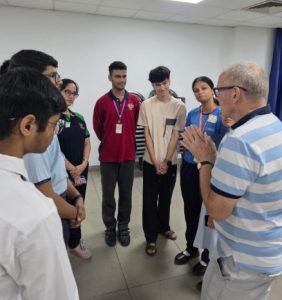
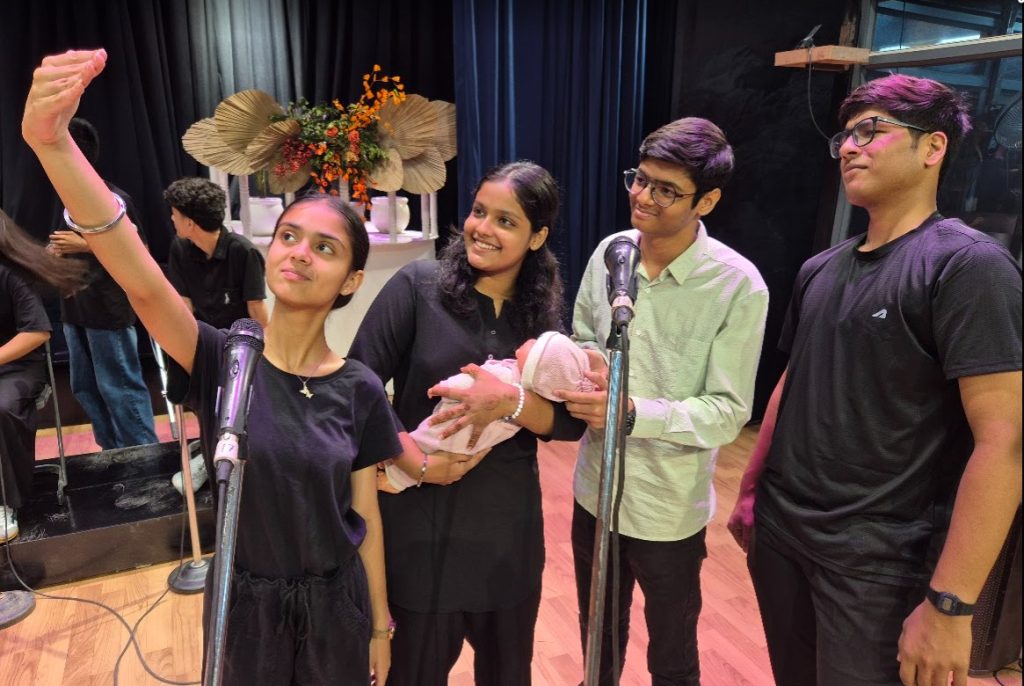
And so it is here, the culmination of the project… reached with a modicum of relief. Not that it has been entirely without pleasure. I always enjoy meeting, and working with, new groups of young people, and this lot have been a delight. But the “play in a week” format, though sensible in some circumstances, does have its limitations, and one can rarely achieve the sort of theatrical impact that one wants, and that a longer, slower rehearsal process allows for.
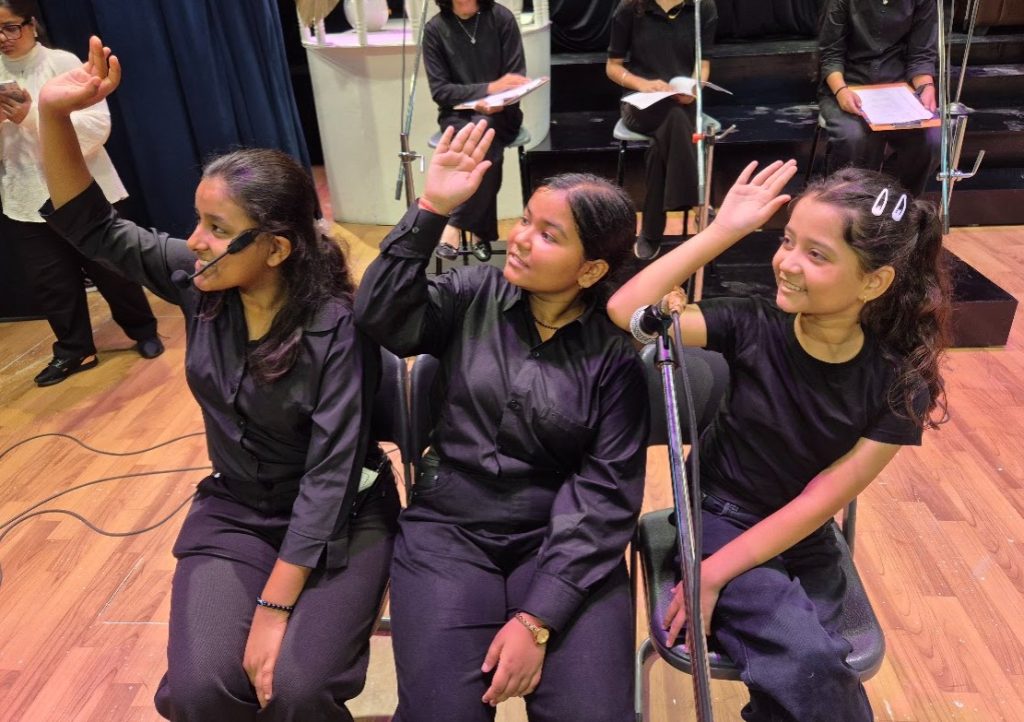
We had been told that, although we did have one more morning to prepare, we would not be able to have access to the stage, as it would be needed in order to set the stage for the entire closing ceremony (of which Utopia was but a small part. But then we were told that it would not be required after all, so we had another opportunity to get on stage and practise, and under rather less fraught circumstances. Not only did we have time for another proper run-through, but also to spend additional time on that problematic final scene. This, then, was the true dress rehearsal, and it proved a far more satisfactory experience. We had the complete cast, the transitions were smooth, and the individual characterisations were clear, with the exaggeration and satire that I had asked for brought out clearly.
The whole closing ceremony was supposed to start at 3… some hopes! It was probably just as well that I was not in the auditorium to fret and fuss about last minute arrangements; I had been whisked away to the VIP room t6o chat with one of the chief guests, a retired Army officer, now a member of various think tanks, who would be n stage later to discuss his book, India At War. Even so, and bearing in mind the fact that this proved a welcome distraction, I was nervous, not knowing what was happening and whether I was needed. (Though I need not be; in my absence, Anuradha had everything under control.)
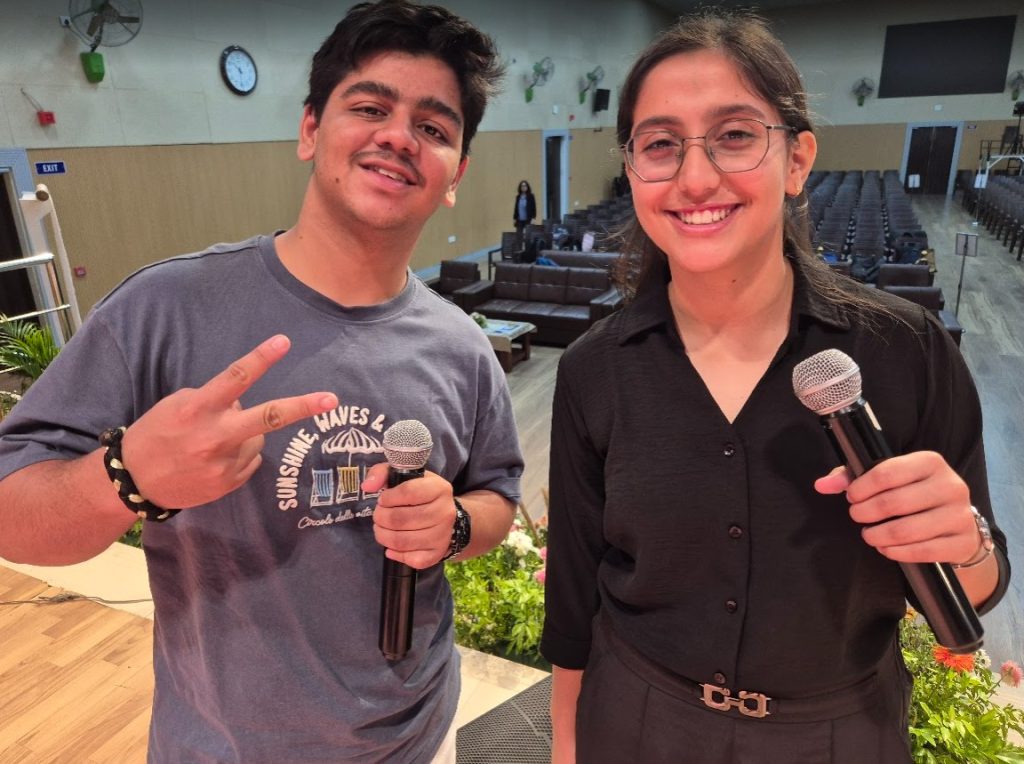
At last, eventually, we were summoned to take our seats. Disappointingly, neither Geeta, her husband Roger, nor her mother were there (though all had places reserved in the VIP seats.) I had hoped that this would not only be a demonstration of a new, collaborative approach, but also an opportunity to demonstrate the limitations of the venue for live theatre.
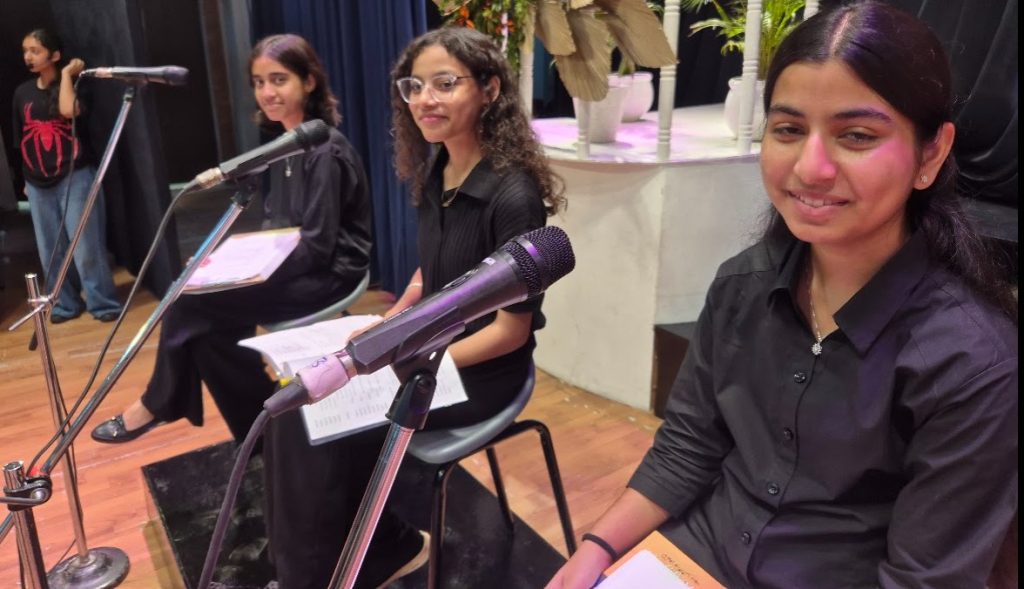
The performance itself was probably the worst of the three times they had run the play on stage. Lines were dropped, entrances muffed, and the microphones not doing their job properly. Though it is also true that they covered up their mistakes, so that was one lesson learnt. Inevitably, I was viewing it with a more critical eye (and ear) than most, and lots of people told me how much they had enjoyed it, but I was a little disappointed nonetheless, for I know they were all capable of better. But the person I was most furious with, especially when I saw the video on Youtube, was myself. The biggest fault of all was audibility, and I was annoyed with myself for not addressing this issue more forcefully and creatively. I generally hate microphones, but that was no excuse to ignore the problem and hope for the best. Despite the technical limitations, thinking back on it now, I can see that there was a better way of addressing the situation which would have allowed more people to be heard. I felt 6that ultimately I had let the cast down a little – not good enough.
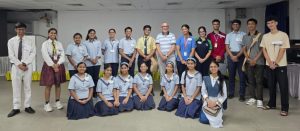
But regrets are useless. I still believe the project was worthwhile and successful. It did show that bringing together students from different schools, regions, countries (there was one boy from Nepal) to work together on a single project, was in itself an idea to be cherished. And that the individual students got an experience that was memorable for them, for all the right reasons. That, at least, was what they told me…